
South Rim weather and what to wear
At about 7,000 feet the South Rim is cooler than most visitors expect: frost on most winter nights, mild summer days and thunderstorms in late summer. About 1,400 metres lower, at the bottom of the canyon, a July day averages 12 °C more.
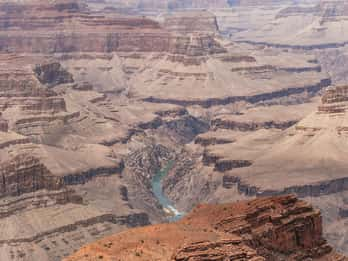
South Rim day trip from Las Vegas with lunch
Coach day trip from Las Vegas · 14 hours
✓ Free cancellation
from $124
Book on GetYourGuide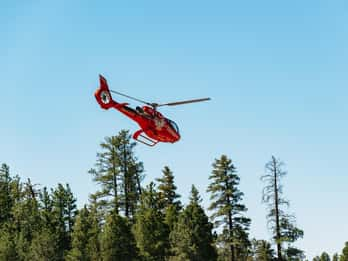
30-minute helicopter flight from Tusayan towards the North Rim
Helicopter flight, 25–30 min, from Tusayan · 30 minutes
✓ Free cancellation
from $269
Book on GetYourGuide
Grand Canyon Classic from Sedona via Desert View
Guided day trip from Sedona · 11 hours
✓ Free cancellation
from $191
Book on GetYourGuide
Grand Canyon Village lies at about 7,000 feet (2,134 m). That height shapes the weather: the rim has cold winters with snow, mild summers and big swings between day and night. The canyon floor, around 2,400 feet (some 730 m) at Phantom Ranch, is a desert with a different climate. In July the National Park Service measures an average high of 29 °C at the rim and 41 °C at Phantom Ranch. For most visitors, who stay on the rim, the rim figures are the ones that count.
Temperatures and rain by month
| Month | Rim high / low | Canyon floor high / low | Rain at the rim |
|---|---|---|---|
| January | 5 / −8 °C (41 / 18 °F) | 13 / 2 °C (56 / 36 °F) | 34 mm |
| February | 7 / −6 °C (45 / 21 °F) | 17 / 6 °C (62 / 42 °F) | 39 mm |
| March | 10 / −4 °C (51 / 25 °F) | 22 / 9 °C (71 / 48 °F) | 35 mm |
| April | 15 / 0 °C (60 / 32 °F) | 28 / 13 °C (82 / 56 °F) | 24 mm |
| May | 21 / 4 °C (70 / 39 °F) | 33 / 17 °C (92 / 63 °F) | 17 mm |
| June | 27 / 8 °C (81 / 47 °F) | 38 / 22 °C (101 / 72 °F) | 11 mm |
| July | 29 / 12 °C (84 / 54 °F) | 41 / 26 °C (106 / 78 °F) | 46 mm |
| August | 28 / 12 °C (82 / 53 °F) | 39 / 24 °C (103 / 75 °F) | 57 mm |
| September | 24 / 8 °C (76 / 47 °F) | 36 / 21 °C (97 / 69 °F) | 40 mm |
| October | 18 / 2 °C (65 / 36 °F) | 29 / 14 °C (84 / 58 °F) | 28 mm |
| November | 11 / −3 °C (52 / 27 °F) | 20 / 8 °C (68 / 46 °F) | 24 mm |
| December | 6 / −7 °C (43 / 20 °F) | 14 / 2 °C (57 / 37 °F) | 42 mm |
Two things stand out. The rim drops below freezing at night from November to March, and the wettest months are July and August, when the rain comes in short, heavy storms. June is the driest month of the year.
Height, sun and water
The NPS points out that exercise at this elevation can be strenuous, and that visitors with heart or breathing problems may have difficulties. Take the walk along the rim at your own pace. Arizona’s air is dry; the NPS advice is to drink water or electrolyte drinks and to use sunscreen and reapply it through the day. A sun hat and sunglasses are on the packing lists of several tour operators.
Water needs extra thought in late 2026. Since the flash flood of 29 August damaged the park’s pipeline, the NPS has asked visitors to bring their own water for drinking. The refill stations at the visitor centres and trailheads may not all be running, so fill your bottles before you arrive. The coach from Las Vegas, for example, hands out one bottle and asks you to bring more.
Summer storms
The National Weather Service gives the monsoon season as 15 June to 30 September. In northern Arizona the moisture usually arrives in the first week of July, and the rain comes mostly in afternoon and evening thunderstorms. The NPS warns that lightning can strike 10 miles across the canyon, and that dangerous, potentially deadly lightning accompanies thunderstorms; caves and rock alcoves are not shelter. When a storm approaches, leave the exposed viewpoints. Flash floods are the other danger, most of all from July to mid-September, and they can follow storms far away. On the rim this mostly means wet clothes: a rain jacket belongs in the bag from July to September.
Storms and wind also ground aircraft. Helicopter and airplane tours from Tusayan are sometimes cancelled for weather, and reviewers describe exactly that. If a flight matters to you, put it early in your stay. The helicopter operator asks for closed-toe shoes, clothing for the weather and an ID.
Spring and autumn layers
Spring and autumn are the seasons of big daily swings. In April the rim averages 15 °C by day and around freezing at night; in October 18 °C and 2 °C. The NPS calls spring breezy to windy, with gusts occasionally over 40 mph, and snow is still possible into April. Some tour operators ask guests to bring a jacket, or to dress in layers, from autumn through spring. A light fleece and a windproof jacket over a T-shirt cover most days, and the jacket comes off when the sun is out.
Winter clothing and ice
Winter at the South Rim can be extreme, the NPS writes: be prepared for snow, icy roads and trails, and possible road closures. Rim lows average −7 to −8 °C in December and January and can fall below −18 °C after storms. The NPS recommends over-the-shoe traction devices for icy footpaths, and poles for those who hike. Roads are treated with cinders, not salt. Road conditions are on az511.com.
A warm jacket, a hat and gloves are worth packing for any winter visit, especially for an early start or sunset at a viewpoint. Hypothermia, when the body can no longer keep itself warm, is the risk the NPS names for winter hikers. Keep at least six feet (2 m) from the edge in every season, and more when the ground is icy.
Shoes and what to carry
For the paved Rim Trail and the viewpoints, comfortable walking shoes with a grip are enough; sandals are a poor choice in winter and on the dirt sections. If you plan to go below the rim, the rules are stricter: carry all the water you need, avoid hiking between 10 am and 4 pm in summer, and read our page on the Bright Angel and South Kaibab trails first. Tour operators often limit luggage; the coach from Las Vegas allows one piece per guest, and some day tours from Sedona and Phoenix do not take large bags. For the months in detail, see the best time to visit and the South Rim in winter.
All tours side by side
A coach day, a short flight and a guided day trip, each with its own packing list from the operator.
| Tour | Format | Duration | Age | Rating | From |
|---|---|---|---|---|---|
| 30-minute helicopter flight from Tusayan towards the North RimPapillon HelicoptersThe 25 to 30-minute flight crosses the Kaibab National Forest and the widest part of the canyon towards the North Rim, passing the Tower of Ra and the Dragon Corridor. | Helicopter flight, 25–30 min, from Tusayan25 to 30-minute helicopter flight | 30 minutesPapillon heliport, Grand Canyon Airport, Tusayan | Under 2 on an adult’s lap; under 16 with an adult | 4.7 (3,154 reviews) | From $269Free cancellationBook on GetYourGuide |
| South Rim day trip from Las Vegas with lunchNational Park ExpressA coach crosses the Mike O’Callaghan–Pat Tillman Memorial Bridge to the South Rim, where you have about three hours around Mather Point, the Trail of Time and the Bright Angel Trail area. | Coach day trip from Las VegasReturn coach transport with Wi-Fi, lunch, granola bar, one bottle of water | 14 hoursPickup at selected Las Vegas hotels (default: Treasure Island) | – | 4.6 (810 reviews) | From $124Free cancellationBook on GetYourGuide |
| Grand Canyon Classic from Sedona via Desert ViewArizona Tour & TravelThe route runs through Oak Creek Canyon and past Cameron Trading Post to Desert View, where you can climb the Watchtower, then along the East and South Rims with a mile-long rim walk and optional time in Grand Canyon Village. | Guided day trip from SedonaHotel pickup and drop-off, guide, park admission, water | 11 hoursPickup at Sedona hotels (7 to 7.30 am) | Children 8 and under need their own car seat or booster | 4.9 (406 reviews) | From $191Free cancellationBook on GetYourGuide |
Prices and ratings come from the booking platform and are shown in US dollars per person. If you book through these links we earn a commission. Your price stays the same. Sorted by number of reviews.
Questions travellers ask
How cold is the Grand Canyon South Rim in winter?
In January the rim averages a high of 5 °C (41 °F) and a low of −8 °C (18 °F), according to the National Park Service. After storms, nights can drop below −18 °C (0 °F), and paths can be icy.
Does it snow at the South Rim?
Yes. The NPS gives an average of 58 inches (147 cm) of snow a year at the South Rim, compared with less than an inch at Phantom Ranch at the bottom of the canyon. Snow can fall into April.
How hot is it at the bottom of the Grand Canyon?
Much hotter than the rim. At Phantom Ranch the July average high is 41 °C (106 °F), and the NPS says summer days in the inner canyon can exceed 43 °C (110 °F).
What shoes should I wear at the Grand Canyon?
Closed shoes with a good grip. Tour operators ask for comfortable or closed-toe shoes, and in winter the NPS recommends over-the-shoe traction devices for icy paths.
When do thunderstorms happen at the Grand Canyon?
Mostly from July to early September, in the afternoon and evening. The NPS warns that lightning can strike 10 miles across the canyon, so leave the rim when a storm approaches.
Where these facts come from
Dates, opening hours and rules change. We checked these pages in November 2026; the official source has the final word.
- National Park Service: Weather and climate (with monthly tables)
- National Park Service: South Rim temperatures (CSV)
- National Park Service: Inner canyon temperatures (CSV)
- National Park Service: Average precipitation at Grand Canyon (CSV)
- National Park Service: Park statistics (elevations)
- National Park Service: Walking, hiking, running and jogging
- National Park Service: Safety
- National Park Service: Hike smart
- National Park Service: Weather dangers
- National Weather Service Flagstaff: Monsoon information
- National Park Service: Visiting Grand Canyon during winter
- National Park Service: Winter hiking
- National Park Service: Projected dates for restoring water to the South Rim (news release)
- Tour pages on GetYourGuide and Viator, checked 11 November 2026


