
History and tribes of the Grand Canyon
The National Park Service names eleven tribes with historic connections to the land that is now Grand Canyon National Park, and people have lived in and around the canyon for thousands of years. On the South Rim you can see traces of that history at Tusayan Ruin and Desert View, and the later story of miners, the railway and the park in Grand Canyon Village.
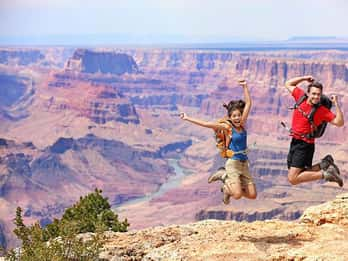
Grand Canyon Classic from Sedona via Desert View
Guided day trip from Sedona · 11 hours
✓ Free cancellation
from $191
Book on GetYourGuide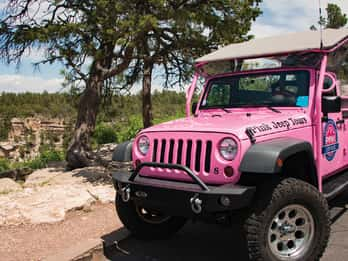
Pink Jeep tour along Desert View Drive to the Watchtower area
Open-air jeep tour, 3 hours, from Tusayan · 3 hours
✓ Free cancellation
from $166
Book on GetYourGuide
Grand Canyon, Wupatki and Sunset Crater from Sedona or Flagstaff
Small-group van (usually up to 10) from Sedona or Flagstaff · 9 hours (Flagstaff) or 11 hours (Sedona)
✓ Free cancellation
from $209
Book on Viator
“We gratefully acknowledge the Native peoples on whose ancestral homelands we gather,” the National Park Service writes on its page about the tribes of the Grand Canyon. It names eleven tribes with historic connections to the land inside today’s park. Navajo, Southern Paiute and Hualapai communities lie along the rim, and the Havasupai live in the last remaining tribal village inside the canyon. This page follows the canyon’s human history in the order the park tells it, with the places on the South Rim where you can still see it.
The eleven tribes
In the park’s own spelling, the tribes are the Havasupai Tribe, the Hopi Tribe, the Hualapai Tribe, the Kaibab Band of Paiute Indians, the Las Vegas Paiute Tribe, the Moapa Band of Paiute Indians, the Navajo Nation, the Paiute Indian Tribe of Utah, the San Juan Southern Paiute Tribe, the Pueblo of Zuni and the Yavapai-Apache Nation. Five of them are Southern Paiute bands, which the park counts separately. Several of the places that day tours visit near the South Rim lie on tribal land with its own rules, not in the national park.
Before the Europeans
The National Park Service divides the human story of the canyon into broad periods: Paleo-Indians from 13,000 to 9,000 years ago, the Archaic period from 9,000 to 3,000 years ago, the Basketmakers from 3,000 to 1,300 years ago and the Ancestral Puebloans from 1,300 to 800 years ago. On the South Rim, the clearest trace of the last of these is Tusayan Ruin, 3 miles (4.8 km) west of Desert View. Its builders began the pueblo around 1185 CE, and it was lived in roughly 800 years ago. A level self-guided path of 0.1 mile (200 m) loops around the walls. The park’s pages disagree on whether the small museum next to it is open, so ask at a visitor centre before you rely on it.
The Desert View Watchtower nearby is not ancient. Mary Colter built it in 1932 after the architecture of the Ancestral Puebloans in the Four Corners region, and its Hopi Room holds paintings by the Hopi artist Fred Kabotie. The Watchtower page covers the building.
This jeep tour includes the standard park entrance fee. Non-US residents aged 16 and older owe the 100-dollar nonresident fee in addition, which the operator collects after booking; children aged 15 and younger pay neither (National Park Service, as of November 2026). Our entrance fees page explains the rules for tours.
Desert View as a tribal heritage site
The park and the tribes are turning Desert View into the Desert View Inter-Tribal Cultural Heritage Site, with demonstrations, exhibits and direct encounters with tribal representatives and artisans. The partners named are the Kaibab Band of Paiute Indians, representing five bands of Southern Paiute, and the Havasupai, Hopi, Hualapai, Navajo, Zuni and Yavapai-Apache tribes. A new welcome center run by the tribes is planned; no opening date had been published by November 2026. The Cultural Demonstration Program, running since 2014, sets out to bring forward the voices of members of the associated tribes. Demonstrations are free and take place at various spots at Desert View, in the Watchtower during spring, summer and autumn, and some may be held at the Grand Canyon Visitor Center. The park pages we checked set no rules on photography at demonstrations; we would ask the artist first.
The Havasupai and Havasupai Gardens
The Havasupai village of Supai lies outside the national park, on land the tribe administers. It cannot be reached by road. The trail starts at Hualapai Hilltop, 191 miles (308 km) by road from Grand Canyon Village, and leads 8 miles to the village. Every hiker and camper needs a reservation from the tribe, day hiking is not allowed, and the tribe treats entry without a permit and wristband as trespassing.
Inside the park, a place on the Bright Angel Trail was long called Indian Garden. To the Havasupai it is Ha’a Gyoh, and the park’s own account says its policies forced them out, and the last residents were removed in the 1920s. In November 2022 the U.S. Board of Geographic Names voted 19 to 0 to rename the place Havasupai Gardens, a step the park described as a measure of respect for the undue hardship it had caused. Earlier, in January 1975, the Grand Canyon National Park Enlargement Act returned 185,000 acres on and near the rim to the Havasupai, together with the use of a further 95,000 acres.
Navajo land east of the park
East of Desert View, Highway 64 runs into the Navajo Nation. Cameron, 25 miles from the East Entrance, is a Navajo Nation town. Cameron Trading Post was founded there in 1916 by the brothers Hubert and C. D. Richardson to trade with Navajo and Hopi people, after a suspension bridge had crossed the Little Colorado River in 1911. Just west of Cameron, the Little Colorado River Navajo Tribal Park charges 5 dollars per person at its overlooks, and national park passes are not accepted. Alcohol is prohibited on the Navajo Nation, drones are banned in its tribal parks, and from March to November the Navajo Nation is one hour ahead of the rest of Arizona, including the national park.
Some tours from Sedona and Flagstaff stop at Cameron Trading Post on the way. On this one, non-US residents aged 16 and older pay the nonresident fee separately, by card to the tour company before the tour date, and bring photo ID.
Spanish soldiers, surveyors and Powell
Europeans first reached the canyon in 1540, when Hopi guides led soldiers under García López de Cárdenas to the rim. The Spanish found it “an impenetrable wasteland”. In 1857–58 the Ives expedition judged that his party would “doubtless be the last” to visit “this profitless locality”. On 24 May 1869 John Wesley Powell set out from Green River, Wyoming, with four boats and a crew the park describes as ex-trappers, mountain men and Civil War veterans like himself, and on 28 August the party reached the end of the canyon. A second expedition followed in 1871–72.
Miners, toll roads and the railway
Prospectors came for gold and copper in the late 1800s, and many found tourists more profitable than ore. Pete Berry mined copper on Horseshoe Mesa and opened the Grandview Hotel with his wife Martha in 1897. Ralph Cameron charged a toll of one dollar per rider on his Bright Angel toll road from 1903; his mining claims were found in 1909 to have been “salted”, and after a fight of more than thirty years the trail passed to the National Park Service in 1928. Uranium was mined at the Orphan Mine near today’s Hermit Road from 1953 to 1969.
The railway changed everything. The first train ran from Williams to the rim on 17 September 1901, the Santa Fe Railway brought in the Fred Harvey Company to provide lodging and food, and El Tovar opened in 1905. The Grand Canyon Village page covers those buildings.
Protection, from forest reserve to World Heritage Site
| Year | Step |
|---|---|
| 1893 | Grand Canyon Forest Reserve under President Benjamin Harrison |
| 1908 | National monument, proclaimed by President Theodore Roosevelt |
| 1919 | National park, by act of Congress of 26 February |
| 1975 | Enlargement Act of 3 January; land returned to the Havasupai |
| 1979 | World Heritage Site, 26 October |
The rocks are older still
The park’s geology page dates the oldest rocks in the canyon at about 1.8 billion years, while the Kaibab Limestone on the rim formed at the bottom of an ocean around 270 million years ago. The canyon itself is young by comparison: the National Park Service estimates its age at five to six million years, though some studies argue that parts are much older. On the Trail of Time, dedicated in 2010 between Yavapai Geology Museum and the village, each metre you walk stands for a million years, and you can touch samples of the rock layers along the way.
This day trip from Sedona includes park admission and time in Grand Canyon Village and at the Watchtower. Non-US residents aged 16 and older pay the 100-dollar nonresident fee to the tour company by card before the tour date.
All tours side by side
Guided tours that include Desert View, the Watchtower or a stop on the Navajo Nation, where much of this history can be seen.
| Tour | Format | Duration | Age | Rating | From |
|---|---|---|---|---|---|
| Grand Canyon, Wupatki and Sunset Crater from Sedona or FlagstaffMa Pa ToursThe morning covers the ruins of Wupatki and the lava fields of Sunset Crater, then Cameron Trading Post, before about three hours of viewpoints on the East and South Rims of the Grand Canyon. | Small-group van (usually up to 10) from Sedona or FlagstaffHotel pickup and drop-off in Sedona or Flagstaff, guide, Cameron Trading Post, ruins and volcano stops | 9 hours (Flagstaff) or 11 hours (Sedona)Pickup at Sedona (7 to 7.30 am) or Flagstaff hotels (8 to 8.30 am); hotel details 72 hours ahead | Children 8 and under need their own car seat or booster | 4.9 (2,148 reviews) | From $209Free cancellationBook on Viator |
| Grand Canyon Classic from Sedona via Desert ViewArizona Tour & TravelThe route runs through Oak Creek Canyon and past Cameron Trading Post to Desert View, where you can climb the Watchtower, then along the East and South Rims with a mile-long rim walk and optional time in Grand Canyon Village. | Guided day trip from SedonaHotel pickup and drop-off, guide, park admission, water | 11 hoursPickup at Sedona hotels (7 to 7.30 am) | Children 8 and under need their own car seat or booster | 4.9 (406 reviews) | From $191Free cancellationBook on GetYourGuide |
| Pink Jeep tour along Desert View Drive to the Watchtower areaPink Jeep ToursA three-hour open-air Jeep tour covers the full 23 miles of Desert View Drive with stops including Navajo Point and views of the Desert View Watchtower; an IMAX ticket is included. | Open-air jeep tour, 3 hours, from TusayanCertified guide, Grand Canyon National Park entry fees, IMAX ticket | 3 hoursIMAX Grand Canyon Visitor Center, 450 AZ-64, Tusayan (check in 30 minutes before) | – | 4.6 (140 reviews) | From $166Free cancellationBook on GetYourGuide |
| South Rim full-day tour from Sedona or FlagstaffArizona Tour & TravelThe tour enters through the South Entrance, gives you time in Grand Canyon Village and at South Rim viewpoints, and returns past the Little Colorado River Gorge with a stop at Cameron Trading Post. | Guided day trip from Sedona or FlagstaffGrand Canyon tour, admission fees, bottled water, return transport from your Sedona or Flagstaff hotel, guide | 10 hoursPickup at Sedona or Flagstaff hotels | Children 8 and under need their own car seat or booster | 4.8 (135 reviews) | From $191Free cancellationBook on GetYourGuide |
| Sinagua ruins, Sunset Crater and the Grand Canyon from SedonaAngels Gate ToursAfter Sinagua pueblo ruins, the Sunset Crater lava fields and Cameron Trading Post, you enter through the East Gate at Desert View, can climb the Watchtower and continue along the South Rim to Grand Canyon Village. | Guided day trip from SedonaHotel pickup and drop-off, bottled water, Cameron Trading Post, Sinagua ruins, Sunset Crater lava fields | 11 hoursPickup at Sedona hotels (7 to 7.30 am); hotel details 72 hours ahead | Children 8 and under need their own car seat or booster | 4.9 (45 reviews) | From $209Free cancellationBook on Viator |
Prices and ratings come from the booking platform and are shown in US dollars per person. If you book through these links we earn a commission. Your price stays the same. Sorted by number of reviews.
What travellers say about the full-day tour from Sedona or Flagstaff
4.8 (135 reviews) · Reviews from GetYourGuide, shortened, names abbreviated
★★★★★ Sarah (United States) · June 2026
Rasa was our guide and he was amazing. He provided so much knowledge and fun facts on our trip. … Plenty of stops at the best places. …
★★★★★ Tatiana (Canada) · December 2025
The tour was exceptionally well organized from start to finish. … the lunch and scenic stops were perfectly planned. …
★★★★★ Fritz (United States) · April 2025
… The smaller group and personalized agenda was perfect. … It would have been nice to know we could/should bring a few snacks for the road.
★★★★★ Mark (United States) · March 2025
… The only draw back was the brevity of some of the stops. I might suggest eliminating one stop to allow more time; or book a 2 day trip if you’re looking to explore more. …
★★★★★ Annette (United States) · September 2025
… The whole point of taking a guided tour is to learn and have more insight from those that know the landscape and history of how it became what it is. … Unfortunately our guide, … did not guide us on our narrated tour. We were dropped off at viewing points and left there until it was pickup time. … The tour ended about 2 hours before our arranged return time, and was silent during drives …
Small groups, well-planned stops and guides with plenty of history and geology are the common thread. Some stops feel short, and in one case the guide simply dropped the group at viewpoints without explaining anything. Pack a few snacks for the road.
Questions travellers ask
Which tribes are connected to the Grand Canyon?
The National Park Service lists eleven: the Havasupai Tribe, Hopi Tribe, Hualapai Tribe, Kaibab Band of Paiute Indians, Las Vegas Paiute Tribe, Moapa Band of Paiute Indians, Navajo Nation, Paiute Indian Tribe of Utah, San Juan Southern Paiute Tribe, the Pueblo of Zuni and the Yavapai-Apache Nation.
Can I visit the Havasupai village from the South Rim?
Not as a day trip. Supai lies outside the national park on land the Havasupai Tribe administers, and it cannot be reached by road. The trail starts at Hualapai Hilltop, which the park puts 191 miles (308 km) from Grand Canyon Village, and every hiker needs a reservation with the tribe. Day hiking is not allowed.
Why was Indian Garden renamed Havasupai Gardens?
Park policies forced the Havasupai from the place they call Ha’a Gyoh, and the last residents were removed in the 1920s. In November 2022 the U.S. Board of Geographic Names voted 19 to 0 for the new name, which the park calls a measure of respect for the hardship it caused the Havasupai people.
How old is the Grand Canyon?
The National Park Service estimates the age of the river, and so of the canyon, at five to six million years, and says that how the Colorado River chose its course is still not clearly answered. Some studies argue that parts of the canyon are much older. The rocks are far older: the park’s geology page dates the oldest at about 1.8 billion years.
Can I see tribal artists at the South Rim?
Yes, at times. The park’s Cultural Demonstration Program, running since 2014, brings members of the associated tribes to Desert View, and the demonstrations are free. They take place in spring, summer and autumn at the Watchtower and other spots at Desert View, and some may be held at the Grand Canyon Visitor Center.
When did the Grand Canyon become a national park?
In 1919, by an act of Congress of 26 February. Before that it was a forest reserve from 1893 and a national monument from 1908. The park was enlarged in 1975 and became a World Heritage Site on 26 October 1979.
Where these facts come from
Dates, opening hours and rules change. We checked these pages in November 2026; the official source has the final word.
- National Park Service: Associated tribes
- National Park Service: Human history
- National Park Service: Tusayan Ruin Trail
- National Park Service: Havasupai Tribe reservation
- Havasupai Tribe: Official tourism permits
- National Park Service: Indian Garden officially renamed to Havasupai Gardens (2022)
- Bureau of Indian Affairs: Land near Grand Canyon restored to Havasupai Indians (1975)
- National Park Service: Desert View Inter-Tribal Cultural Heritage Site
- National Park Service: Desert View Cultural Demonstration Program
- National Park Service: Desert View
- National Park Service: Explorers
- National Park Service: Miners
- National Park Service: Rails and roads
- National Park Service: Management and designations
- National Park Service: Geology
- National Park Service: Geologic formations
- National Park Service: The Trail of Time
- Cameron Trading Post: History
- Navajo Nation Parks: Little Colorado River Navajo Tribal Park
- Navajo Nation Parks: Rules and regulations
- National Park Service, Navajo National Monument: Operating hours and seasons (time zone)
- National Park Service: Fees and passes
- Tour pages on GetYourGuide and Viator, checked 11 November 2026


